Cracked and fractured drains
Cracked Drain Pipe Repair – Options That Avoid Digging
Cracked drains are common in British housing stock. Vitrified clay was the standard for decades, it is brittle, and after fifty or a hundred years of ground movement, traffic loading and root pressure some sections fracture. The good news is that a cracked pipe which still holds its shape can often be repaired internally.
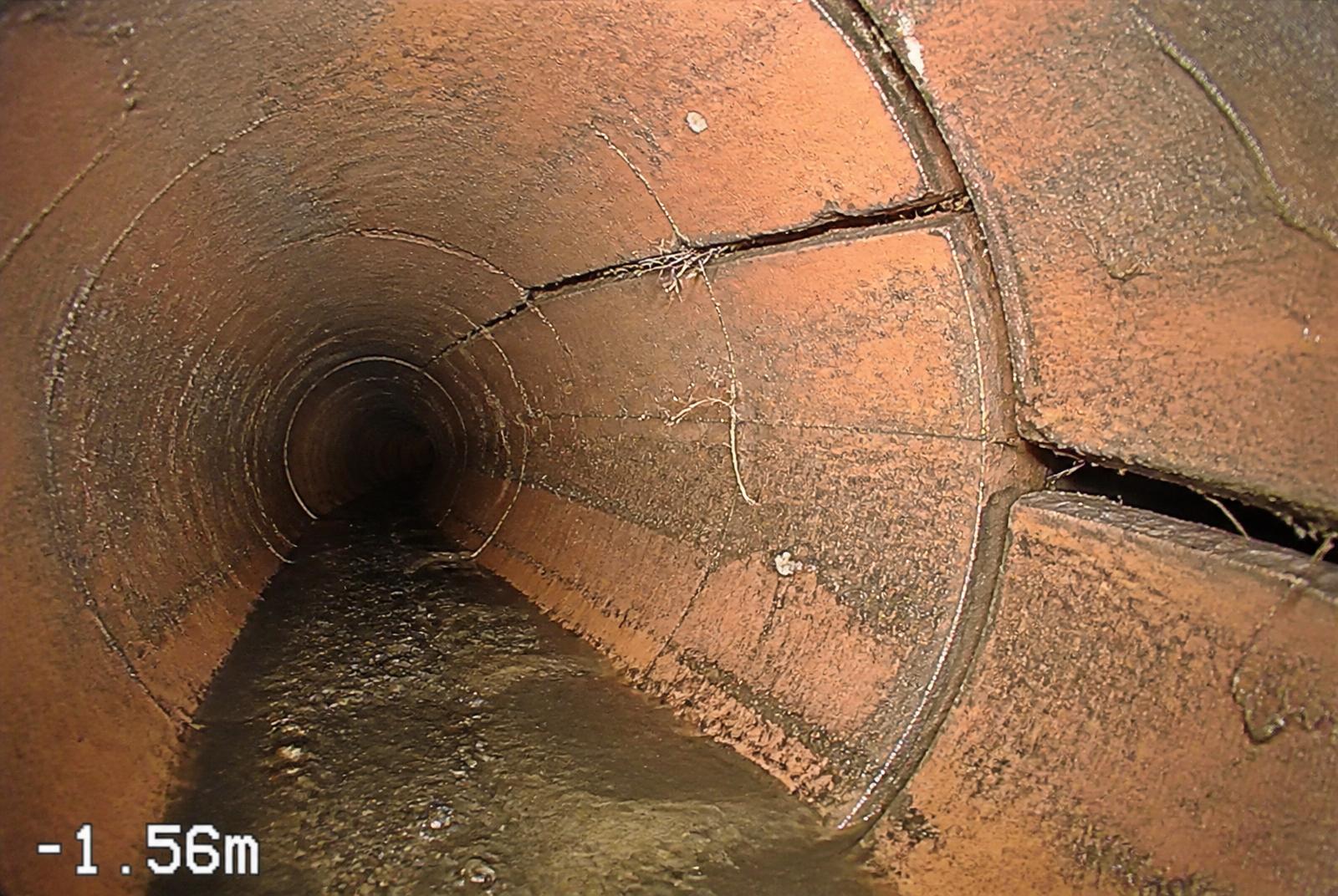
Symptoms that often point to a cracked drain
- Blockages that keep returning at the same point after clearing
- Slow drainage from baths, showers or ground-floor fixtures
- Gurgling from a gully, toilet or waste pipe
- Foul smells around a chamber, gully or garden area
- Damp or soft ground, sinking paving or a dip in a lawn along the drain line
- Unusually vigorous plant growth directly over the pipe run
- Rats appearing in a garden or under floors near the drainage line
None of these confirm a crack on their own. They justify a look inside the pipe.
Why drains crack
- Age and material fatigue — brittle clay and early concrete pipework
- Ground movement — clay soils shrinking and swelling through dry summers and wet winters
- Root pressure — roots exploiting and then widening a hairline defect
- Surface loading — vehicles parked over shallow drains, or a new driveway built above one
- Building work — extensions, foundations and services disturbing an existing run
- Poor original bedding — inadequate support leaving the pipe to flex
Diagnosis: the CCTV survey
A CCTV drain survey establishes what matters for the repair decision: whether the crack is circumferential or longitudinal, whether the pipe is still round, whether joints have moved, how many defects exist along the run, and how far the damage sits from an access point. Without that, any quotation is a guess.
Repair option 1: patch lining
Where the survey shows one crack in otherwise sound pipe, a drain patch repair seals that short section only. It is the least invasive and usually the cheapest structural option — often around £350–£1,200 as a market guide.
Repair option 2: full drain relining
Where cracking runs along the pipe, or several defects appear on the same length, full drain relining forms a continuous liner through the damaged run. It costs more than a patch but treats the whole section rather than one point, which can work out better value on a deteriorating pipe.
Repair option 3: when excavation is still needed
Lining is not a universal answer. Excavation and replacement may be necessary where the pipe has collapsed, lost a substantial part of its wall, deformed heavily, or dropped badly out of alignment at a joint. The relining vs excavation comparison sets out where each approach fits.
Indicative repair pricing
| Work | Typical UK price guidance |
|---|---|
| CCTV survey to confirm the defect | £150–£300 |
| Patch repair for a single crack | £350–£1,200 |
| Relining, 100 mm pipe | £70–£130 per metre |
| Relining, 150 mm pipe | £120–£170 per metre |
Full detail sits on the drain relining cost guide.
Related
Keep reading
Next step
Get a cracked drain assessed
Describe the symptoms and enter your postcode. We help route the enquiry to a drainage specialist servicing your area.
We are an enquiry service, not a drainage contractor. The specialist who receives your enquiry carries out the CCTV survey, quotation and any repair work.