Drain lining · CIPP
Drain Relining – Repair Damaged Pipes From the Inside
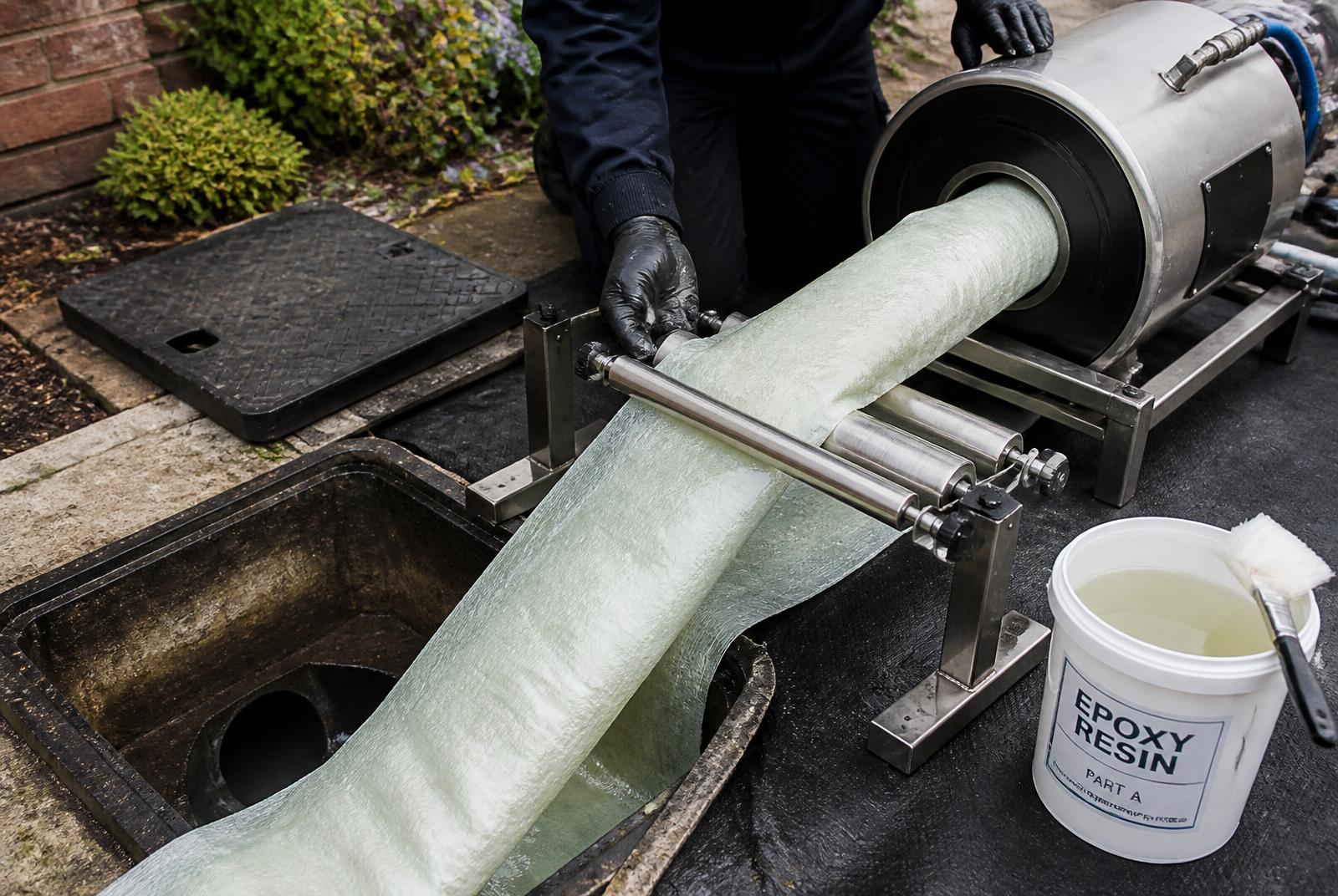
Drain relining, sometimes called drain lining or CIPP drain lining, rebuilds a damaged pipe from within. A resin-carrying liner is drawn into the existing drain, inflated against the pipe wall and left to harden, forming a new sealed surface along the repaired length. In most cases the work is carried out through an existing inspection chamber, so the ground above the pipe stays where it is.
When drain relining can be suitable
Relining tends to be considered where the pipe is damaged but still structurally recognisable — it holds its shape, the bore can be cleaned, and a liner can be pulled through without obstruction. Common candidates include:
- Cracked clay or concrete drains that still hold their round profile
- Open or displaced joints letting water and fine roots in
- Pipes with root intrusion once the roots have been cut out
- Deteriorated older pipe walls where the surface has worn or scaled
- Drains running beneath driveways, patios, extensions or established gardens
It is less likely to suit a pipe that has substantially collapsed, lost a large part of its wall, dropped out of line at a joint, or deformed to the point where a liner cannot seat properly. In those cases a specialist may recommend excavation and replacement of the affected section — see drain relining vs excavation.
The relining process, step by step
- 01
CCTV inspection
The drain is filmed from the chamber so the defect type, its distance along the pipe and the overall pipe condition are recorded before anything is quoted.
- 02
Cleaning and preparation
High-pressure jetting removes silt, scale and grease; a cutter clears roots or protruding material. A liner cannot bond to a dirty or obstructed pipe.
- 03
Measuring and liner selection
The damaged length, pipe diameter and any bends or junctions determine whether a patch, a partial liner or a full-length liner is used.
- 04
Liner installation
The resin-impregnated liner is inserted and inflated so it presses firmly against the inside wall of the host pipe.
- 05
Curing
The resin hardens in place. Curing may be ambient, hot-water, steam or UV-assisted depending on the system and the pipe.
- 06
Final CCTV inspection
The finished liner is filmed to confirm it is seated evenly, that junctions have been reinstated where needed, and that flow is unobstructed.
Ask for the final footage. It is the clearest evidence of what was done, and useful if you later sell the property.
Benefits homeowners usually care about
- Far less digging. Block paving, resin drives, patios and mature planting normally stay intact.
- Shorter disruption. Many residential lining jobs are completed within a day, though longer or awkward runs take more.
- A sealed pipe wall. Closing cracks and open joints removes the entry point roots were using.
- Smoother bore. Removing scale, root stubs and joint lips reduces the places debris catches.
- No reinstatement bill. Excavation costs often include making good the surface afterwards; relining largely avoids that.
Honest limitations
- A liner slightly reduces internal diameter, which matters on small-bore pipes.
- Severe collapse, heavy deformation or badly dropped joints may rule lining out.
- Multiple tight bends or several junctions complicate installation.
- Poor access can restrict what equipment can reach the chamber.
- Suitability is decided from CCTV findings, not from a description over the phone.
What relining tends to cost
Many standard UK residential relining jobs work out around £85–£150 per metre, but that range moves considerably with pipe diameter, length, access and how much preparation is needed. The figures below are general market guidance rather than quotations.
| Work | Typical UK price guidance |
|---|---|
| Drain relining, 100 mm pipe | £70–£130 per metre |
| Drain relining, 150 mm pipe | £120–£170 per metre |
| Localised patch repair | £350–£1,200 |
| Short relining project | £600–£2,000 |
The drain relining cost guide breaks down each factor, including why London pricing often sits higher.
Related reading
Work out what your drain actually needs
Relining is one option among several. These pages cover diagnosis, alternatives and the specific defects that lead to a lining repair.
Next step
Ask about relining your drain
Send us the postcode and the symptoms. We help route drain relining enquiries to suitable specialists servicing your area.
We are an enquiry service, not a drainage contractor. The specialist who receives your enquiry carries out the CCTV survey, quotation and any repair work.