Root intrusion
Tree Roots in Drains – Repair Options Without Major Excavation
Roots follow moisture. A drain carrying warm waste water through dry soil is an obvious target, and any crack or slightly open joint is an open door. Once inside, roots thicken and branch into the flow — which is why root-affected drains tend to block again and again.
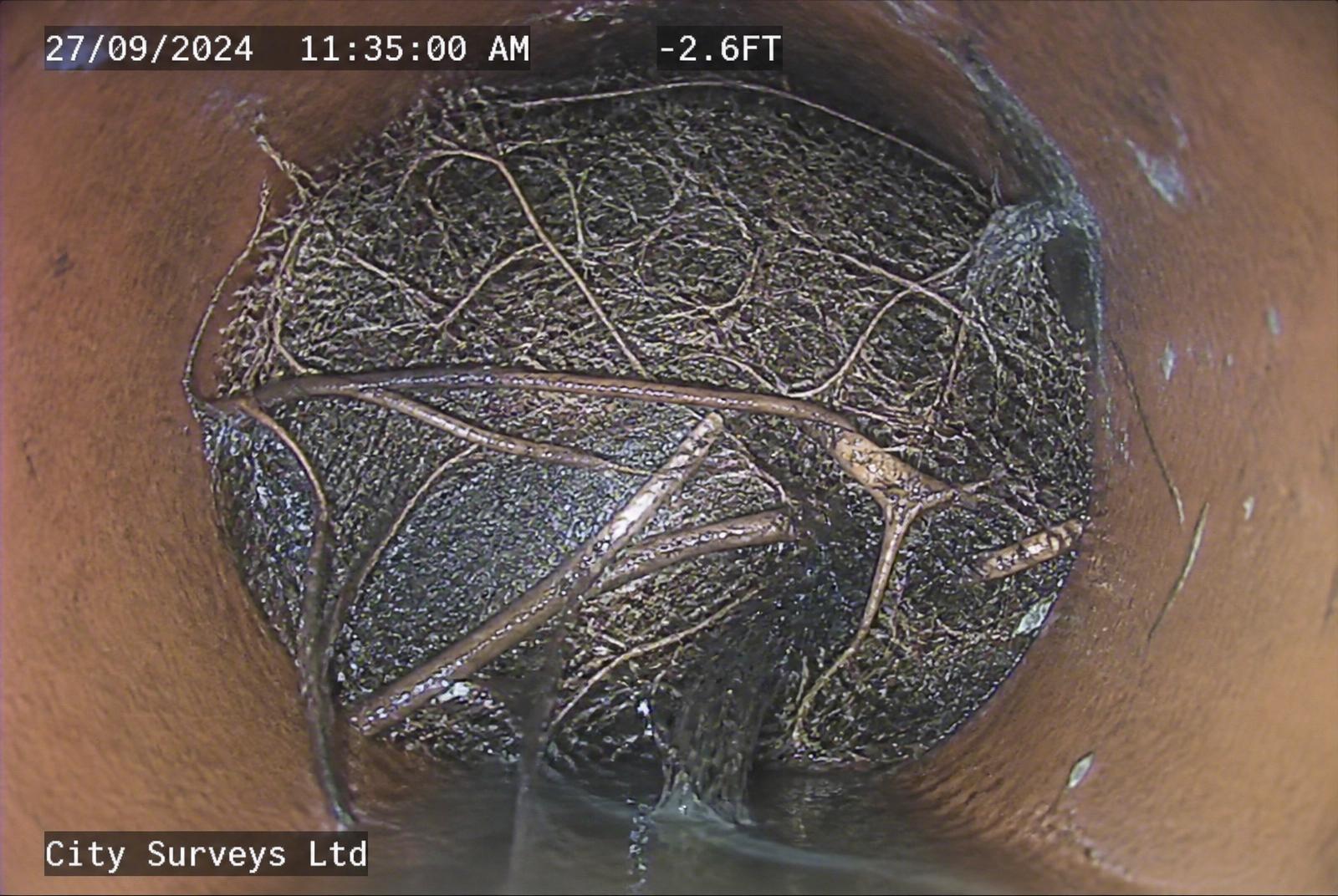
How roots get into a drain
- Fine root hairs detect moisture escaping from a hairline crack or open joint
- They enter through that gap, where there is water, warmth and nutrients
- Inside the pipe they branch into a fibrous mass across the bore
- Paper, fat and solids catch in the mass, and flow slows
- As the root thickens it can widen the original defect further
Species matter. Willow, poplar, ash, sycamore and large shrubs planted close to a drain run are frequent culprits in UK gardens, though any established tree near a defective pipe can be involved.
Why cutting the roots out is only half the job
A cutting head or high-pressure jetting will clear a root mass and restore flow, sometimes impressively. But cutting does not repair the crack or joint that let the roots in. The root system is still there, the entry point is still open, and regrowth is normal — frequently within a year or two. Clearing alone therefore becomes a recurring cost rather than a repair. This is the same pattern described on recurring blocked drains.
The repair sequence
- 01
CCTV inspection
Locate the intrusion points, count them, and assess whether the pipe around them is still sound. See the CCTV drain survey page for detail.
- 02
Root removal
Mechanical cutting and jetting clear the root mass back to the pipe wall so a liner can be installed against a clean surface.
- 03
Patch lining
Where a single joint or crack is the entry point, a patch seals that short section only.
- 04
Full relining
Where roots have entered at several points along the run, a continuous liner seals the whole length.
- 05
Post-repair survey
Footage confirms the entry points are sealed and the bore is clear.
- 06
When replacement is necessary
If roots have broken the pipe apart, displaced joints badly or caused collapse, that section normally needs excavating and replacing.
Points worth knowing before work starts
- Sealing the pipe removes the water source at that point, which discourages regrowth into the drain.
- Removing the tree is rarely necessary and may not be permitted — many UK trees are protected by a Tree Preservation Order or sit in a conservation area. Check with your council before considering removal.
- If the affected pipe is shared with neighbouring properties, responsibility may sit with the water company rather than you.
- Ask for the pre- and post-repair footage, especially if roots have caused damage before.
Related
Diagnosis and repair
Next step
Ask about root removal and lining
Tell us where the trees are relative to the drain, how often it blocks, and your postcode. We help route the enquiry to a specialist servicing your area.
We are an enquiry service, not a drainage contractor. The specialist who receives your enquiry carries out the CCTV survey, quotation and any repair work.